

🌿 TUESDAY | ORCHARD ESSAY #6
When Carrying It Alone Stops Being Strength

Many senior leaders take pride in carrying things quietly.

Pressure. Responsibility. Uncertainty.
They tell themselves this is what leadership requires.
Carrying it alone looks like strength from the outside.
On the inside, it’s often a warning sign.
The Peace Index helps make this visible, especially in the area of People.
Relational peace isn’t a luxury for leaders.
It’s protective.
When leaders lack peers they can be honest with, something subtle begins to erode.
Not competence.
Not commitment.
Joy.
Decisions start to feel heavier than they used to.
Conversations feel more transactional.
Leadership becomes something to endure rather than something that gives life.
Many leaders believe friendship at their level is optional.
Risky, even.
They assume needing it means weakness.
In reality, the opposite is true.
Healthy leaders don’t carry alone.
They carry together, selectively and wisely.
They have peers who can hear the unfiltered version.
People who understand the weight without needing explanation.
Friends who don’t need to be impressed or managed.
This isn’t about oversharing.
It’s about not disappearing.
When leaders stop tending relational peace, they lose more than connection.
They lose perspective.
They lose lightness.
They lose the ability to lead from fullness rather than fatigue.
As this year closes, the question isn’t whether you can carry it alone.
It’s whether carrying it alone is quietly costing you more than you realise.
What is the Peace Index?
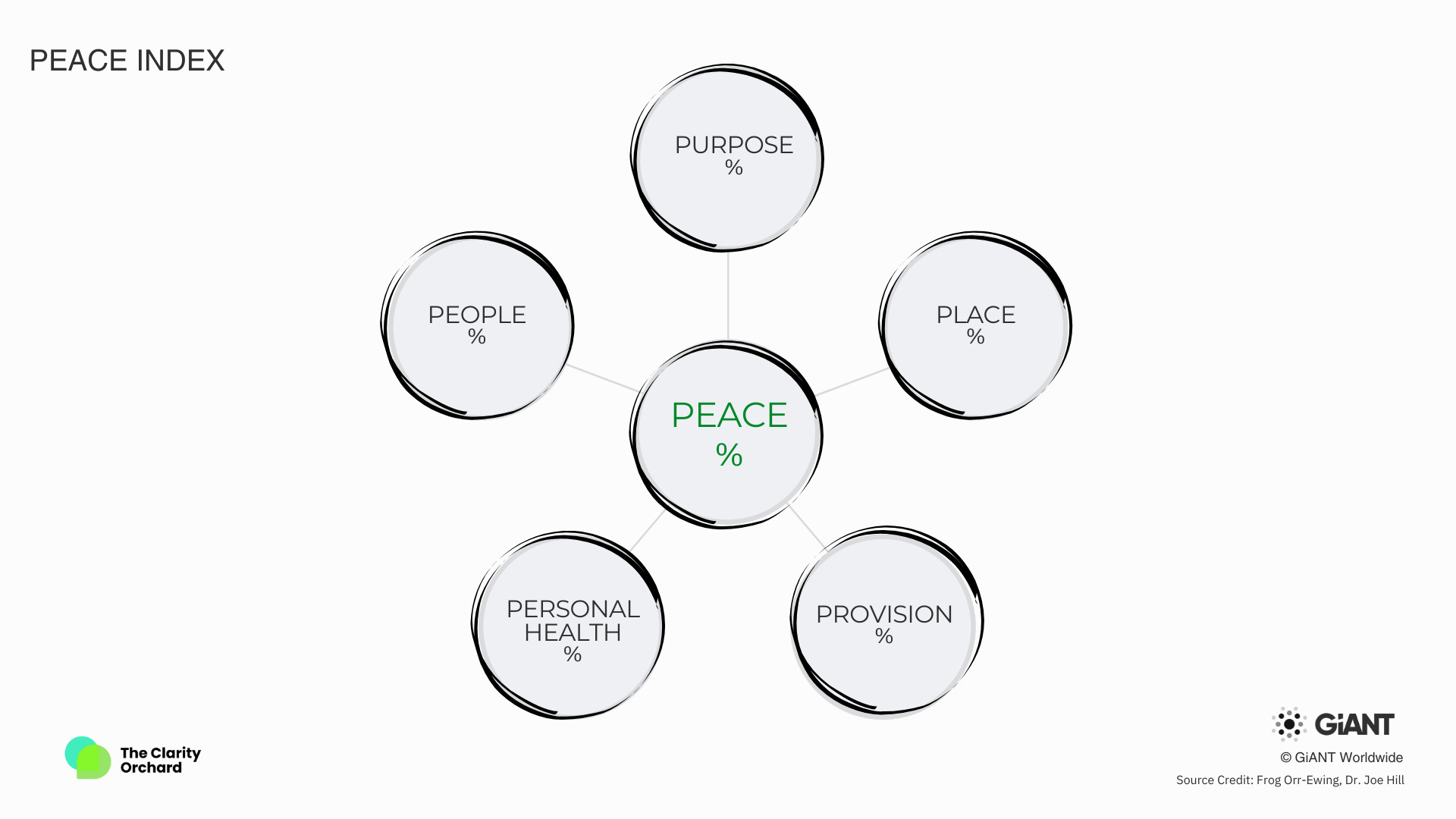
A personalized assessment designed to measure your current level of peace across five key components: purpose, people, place, provision, and personal health. By evaluating these interconnected areas of your life, we aim to provide you with a comprehensive understanding of the factors influencing your overall sense of well-being.
In this report, you will find your Peace Index score, represented as a percentage, along with individual percentage scores for each of the five components, offering valuable insights and guidance to help you cultivate a more fulfilling and peaceful life.
Purpose
Purpose, in the context of personal peace, refers to the underlying intention or driving force that brings meaning and direction to your life. It is closely tied to your values, passions, and aspirations, and plays a crucial role in achieving a sense of fulfillment and contentment. When you are living in alignment with your purpose, you are likely to experience greater inner peace and satisfaction, as you feel connected to your authentic self and able to contribute positively to the world around you.
Provision
Provision, in the context of personal peace, refers to the ability to meet your financial needs and maintain a sustainable lifestyle without excessive stress or worry. It encompasses having sufficient income to cover your expenses and allows you to engage in fulfilling activities without feeling limited by your financial situation. When you have adequate provision, you are more likely to experience a greater sense of peace, as the stress related to financial concerns is reduced, enabling you to focus on your well-being and other aspects of your life.
People
People, in the context of personal peace, refers to the individuals with whom you maintain relationships, be it family, friends, or colleagues. These relationships play a crucial role in fostering a sense of connection, support, and emotional well-being. When you cultivate healthy and fulfilling relationships with the people around you, you are more likely to experience a greater sense of peace, as the stress and strain related to interpersonal issues are minimized, allowing you to thrive in a supportive and nurturing environment.
Personal Health
Personal health, in the context of personal peace, encompasses your physical, emotional, and mental well-being, contributing to your overall sense of balance and vitality. It involves taking care of your body, nurturing your emotional state, and fostering a healthy mindset, all of which impact your ability to thrive in life. When you prioritize and maintain your personal health, you are more likely to experience a greater sense of peace, as the stress related to any lack of well-being is reduced, enabling you to live a more fulfilling and balanced life.
Place
Place, in the context of personal peace, refers to the physical surroundings, environment, or living situation that nurtures a sense of rest, retreat, and rejuvenation. It encompasses the aspects of your surroundings that contribute to a feeling of comfort, safety, and overall enjoyment, fostering a positive atmosphere for personal well-being. When you feel at ease and in harmony with your “place”, you are more likely to experience a heightened sense of peace and contentment, as it enables you to recharge and maintain a balanced state of mind.
Where do you need to be intentional in 2026?
that is just a cool image 🦏
the most important provision seems to be people based on the studies we've seen, but all obviously part of it